Friday, August 3, 2012

Now I want to rewatch "Signs"


Film: Jeff, Who Lives at Home
Rating: 4.5/5

In the opening scene of Jeff, Who Lives at Home, the title character articulates a profound philosophical understanding of M. Night Shyamalan’s Signs. Besides being an excellent description of (part of) what makes Signs a great film, it is a perfect introduction to the character of Jeff. Movie characters born from ideas in other movies are rare, but can rank among the more interesting.

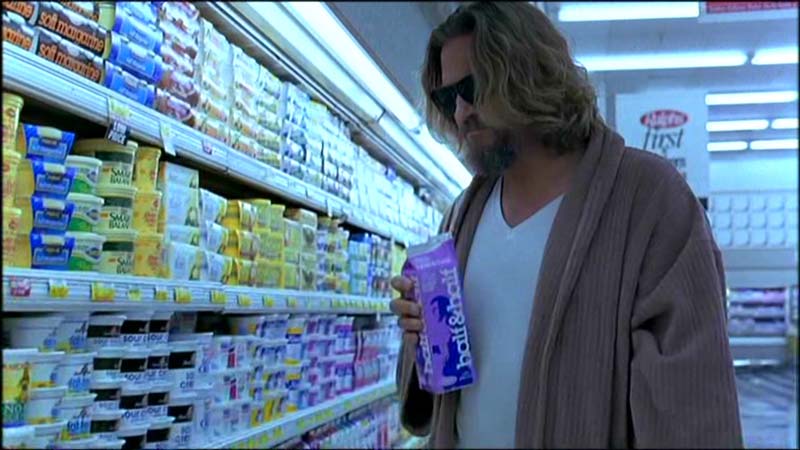
Jeff (Jason Segel) looks for “signs” in his everyday life. There isn’t much opportunity for them to appear in said life, considering he is 30 years old, unemployed, and spends most of his time in his mother’s basement. He isn’t paranoid, merely lazy, with a Lebowski-esque philosophy on how to conduct himself. In a way he is the most calculating character in the movie; generally, he is reluctant to do anything, but when he does decide to undertake something, he prefers to think it out first. Or he just gets high. Usually he gets high.

His boisterous brother Pat (Ed Helms), does not share Jeff’s childlike sentiment that there are greater things simply awaiting. He claims to have it all figured out, and it is as simple as getting a job and a wife, and making the right choices to live a long, “normal” life. Turns out Pat is not very good at this, however, as his marriage is on the rocks. In addition to that, he is materialistically impulsive, easily buckling to his desire for a Porsche.

On one (presumably rare) occasion, Jeff emerges from his den to run an errand. One simple outing to the store. Along the way, he begins to see things that may be the signs for which he has been searching. Or at least that’s what he believes, with just enough conviction to forget his chore and follow them. This is new for Jeff: moving on instinct. Awkwardly and insecurely, he pursues the agents of fate, and winds up crossing paths with his brother Pat, who proceeds to have quite possibly the worst day of his life. Together, they investigate a hunch that Pat’s wife Linda (Judy Greer) is having an affair. Jeff tells his brother about the signs. Coincidence, Pat scoffs, but Jeff cannot help but feel the gentle tug of destiny.

The brothers realize that they have had similar dreams involving their late father. Is that coincidence? Pat reaches for a rational explanation, much to the dismay of Jeff and his irrational (though not necessarily incorrect) answer. Much of the film’s progress lies in such contrasts between Jeff, Pat, and their mother, Sharon (Susan Sarandon). Sharon is widowed, works in a cubicle, and seems perpetually frustrated with her sons, particularly Jeff. Interestingly, although Sharon is the parent, in her own storyline she faces the more adolescent situation: she is rather innocuously approached (via instant message) by a “secret admirer” from her workplace. Jeff and Pat, meanwhile, are technically the children, but are caught up in the very adult situation of adultery. All three, however, act like children to some degree most of the time. Sharon and her friend giggle like teenagers over her anonymous suitor. Jeff and Pat, often bickering, act rashly and immaturely, sneaking about and following Linda.

The more important contrast between the characters, though, is their respective beliefs. If stumped, Jeff would sit down on the curb and wait for something to come along. Pat believes that great things much be reached out for and grabbed. Sharon, on the other hand, has entirely given up hope for anything happier than what she has, which is why she is hesitantly intrigued by the proposition she receives. The family struggles through the day, blindly headstrong, unable to comprehend each other’s outlooks, and this is where the movie finds its magic and becomes one of the most enjoyable and satisfying of the year.

Jeff is the fourth feature by the writing-directing team of Jay and Mark Duplass. All of their movies are about family. They are two of the most sensitive comedy writers currently working. And (as of late, at least) they create characters that are complex, multi-dimensional, and real, and they require very talented actors to portray them. Of the performances in Jeff, Segel’s stands out the most. Within the 80-odd minutes of the movie, he transitions back and forth (successfully, and many times) between a leading role and a supporting role. This is the same character, mind you. In some scenes, Jeff is alone, misunderstood, confusedly pursuing what he feels is his personal destiny. In others, although still awkward and naïve, he is the loyal, intrepid sidekick to his increasingly desperate and distraught brother. Perhaps this disparity is a flaw of the writing, but Segel understands the subtle similarities and differences of Jeff’s multiple sides so well, and plays them with such beautiful sincerity and painful humor, that he melds them into one complete character. It is easily his best screen performance to date.

Ed Helms, too, breaks through as an impressive dramatic actor. Here, he relieves himself of the goofiness that has burdened him for the past six or so years. It has worked to his advantage on The Office and in last year’s Cedar Rapids, less so in just about everything else. In Jeff, when Helms is upset, we are not laughing. As a matter of fact, we are often not laughing even when he is trying to be funny, and that seems intentional as well. All of the principle characters in Jeff are eventually forced to take deep introspective looks, and we get the impression that Pat feels the worst about what he sees.

The Duplass Brothers achieved their greatest commercial and critical success in 2010 with Cyrus. There are key similarities between that film and Jeff that are worth pointing out. In both films, for instance, the Duplasses employ a visual technique, inspired by the mumblecore movement, of highly conscious handheld filming. The practicality of this is debatable, but an argument could be made that it fosters a more intimate environment in which to observe the characters. Also akin to Cyrus, Jeff features a delightful score from indie comedy favorite Michael Andrews. But there is a deeper, and more revealing, connection between them: Both Cyrus and Jeff are about good people who have forgotten how to act in order to sustain healthy relationships. With this in mind, the two movies become just about equally funny and touching.

Ultimately, though, there is a more universal theme in Jeff, and one that causes us to think more than Cyrus does. Maybe not a lot more, but a little more. The themes of Cyrus are mainly emotionally driven, while in Jeff, the beliefs of the individual characters are what carry the movie to its conclusion.

But why? Is the ending inevitable? Or does it only come about because Jeff chooses to get out of his mother’s basement and go to the store? Jeff, Who Lives at Home is a movie of more questions than answers, but it does declare one certainty, and if you have been won over by the film by then, you will find it quite pleasing. In life there are, as Jeff would say, “perfect moments.” Maybe by destiny. Maybe because of our choices. Maybe through the influence of others. They happen. If you’re unhappy in the morning, who knows where you’ll be at the end of the day.


SIDE NOTE: As pointed out earlier, Jeff is vaguely reminiscent of “The Dude” Lebowski. Lebowski’s first name was Jeff. Is that coincidence? Serendipity? Was it planned? And don’t forget that Lebowski was played by Jeff Bridges. What does that tell you?

Sunday, September 11, 2011

The 9 Most Underrated Springsteen Songs


1. "Johnny 99"
Not once have I heard this songs mentioned in any context whatsoever, let alone in any list of Springsteen's best works. It may not be as chilling as the other tracks on Nebraska, but the grim story and Bruce's whimpering vocals give it just as much desperation as the rest of the album.

2. "Better Days"
Perhaps compensating for the relative musical staleness without the E Street Band, the Boss' voice never sounded manlier than on this overlooked single from Lucky Town. So what if half of the lyrics sound like worn-out sayings? The other half are among his strongest.

3. "Two Hearts"
Thumbs-up to Win Butler for loving this song, which seems to have blended in to the rest of the "throwaway" rock and roll tracks on The River. It has just as much pop stamina as "Hungry Heart," and if Bruce had given that song to the Ramones like he planned, "Two Hearts" could have easily taken its place as his first big radio hit.

4. "Blinded By The Light"
You know how people make fun of Bob Dylan for writing nonsensical lyrics? The colorful insanity generated by this early Springsteen composition could be the basis for a whole Where's Waldo? puzzle. Back when the Boss was "another Dylan clone," he probably relished the idea of us finding ourselves totally lost in the tireless instrumenation and absurd character jumble in this song, which features some of the most delightful energy and rhyming of his whole career. The Manfred Mann version is missing a lot of that.

5. "Into The Fire"
6. "You're Missing"
and 7. "My City Of Ruins"
Everyone goes crazy for the opener ("Lonesome Day") and the title track from Springsteen's 9/11-themed The Rising, but these are clearly the album's greatest emotional triumphs. Between the three of them, they sum up perfectly all of the grief, confusion, faith, and unity that Springsteen strove to address on the rest of the album. And musically, they are some of his most impressive works. It might just be the strings talking, but "You're Missing" could definitely be considered the Boss' gentlest composition, and "My City Of Ruins" is perhaps the most emotive keyboard-based recording since the legendary live version of "No Woman, No Cry."

8. "Streets Of Philadelphia"
I know it won an Oscar, but still. This song don't get no respect.

9. "Blood Brothers"
For the most part, I can understand the lack of interest in this mid-90's single. It might be a bit on the conventional, mainstream side, but I find it more agreeable than most of Springsteen's work of that era. Plus, the EP of the same name reuinted him with the E Street Band. Nothin' wrong with that!

Wednesday, May 18, 2011

Ignorance is bliss, divorce is hell

Film: The Squid and the Whale
Rating: 4 and a half

Usually when we're given the premise of a "crumbling family," we envision a once-strong structure falling apart in massive chunks, or collapsing in on itself like a building demolition. Noah Baumbach's The Squid and the Whale is more like a series of tiny explosions. The Berkman family's self-destruction in this semi-autobiographical film is like a game of Jenga, where little pieces come out one at a time, but there's always potential for catastrophe.

The father (Jeff Daniels) is a sardonic, intellectual type: English professor, washed-up novelist, tennis enthusiast. He doesn't have the time or capacity to actively care for his family because he's too busy picking philistines out of a crowd and proclaiming A Tale of Two Cities "minor Dickens." The mother (Laura Linney) is unfaithful, and becomes the subject of her husband's envy when her first novel gets published. They divorce, but we can tell that they had been separated in their minds for a long time.

Bernard and Joan, as they coldly refer to one another, use words to spite each other as much as action. The way the broken couple treat each other is potent enough, but the real disaster is what seeps down into the children. The older son (Jesse Eisenberg) sucks up all of his father's arrogant wisdom like a sponge, growing to hate his mother and ruin his first romantic relationship. The younger son (Owen Kline) takes up drinking and swearing and other unpleasant habits, to the exhausted disapproval of his parents and his tennis instructor (William Baldwin?!). The family gives up on politeness, losing any sense of deceny they may have felt around each other before.

Watching this movie is sort of like a form of torture, in that it is a very emotionally harrowing experience. Take the opening scene, for example. A tennis match: Daniels and Eisenberg versus Linney and Kline. The purpose is clearly to establish the nature of the characters, reflect the state of the marriage, and even foreshadow the sides that the children will take after the divorce. We can tell all of that less than ten seconds into the scene. If we are already watching it with an analytical eye, the film hardly presents a challenge. It has little ability to surprise us. Any psychiatrist would surely say that the family members are "textbook cases" of one condition or another. But Baumbach isn't going for depth of character. What the film does instead is turn our analysis against us, poisoning us with our own intuition, psychologically sickening us, making us wish we didn't understand so much of what's happening. Baumbach doesn't just want to show us the characters' pain (perhaps the pain he went through when his parents divorced), he wants us to actually feel pain. He brings to the screen something that is bold and rare: constant intentional discomfort. Like Schindler's List, but closer to home. Baumbach creates a conflict beyond the ones just within the Berkman family, a conflict between the viewer and the film. We are nauseated by what we see, but we hang on, waiting with fatigued intensity for that moment when the characters realize that there is something to be learned. They've got to realize it, right?

Tuesday, April 26, 2011

The stuff they can't teach you, and maybe shouldn't

Film: 12 and Holding
Rating: 5

Michael Cuesta's 12 and Holding is an island of emotional density in a sea of goofy, hackneyed coming-of-age stories. In today's world, most movies about children treat their subjects as immature, even petty in some cases. When compared to these, Cuesta's film almost seems too heavy. Not in a melodramatic way, but when most kid movies these days are rated G or PG and aren't meant for audiences older than the characters, the thematic elements here alone would probably be enough to secure an R rating.

The film, distributed by the Independent Film Channel in 2005, follows a group of three 12-year-old friends in the weeks after a fourth friend is killed in a treehouse fire. One is the victim's twin brother Jacob (Conor Donovan), who was born with a burn-like birthmark over half of his face. Another is the paternally deprived Malee (Zoe Weizenbaum), a lonely and misunderstood flautist whose mother is a psychiatrist but seems ignorant of her daughter's problems. The other is the overweight Leonard (Jesse Camacho), who survives the treehouse fire but loses his senses of smell and taste. Over the course of the film, we explore the way the characters react to the fire, and how they deal with the changes that adolescence happens to bring in its aftermath.

The stories, which are vividly dissimilar but equally fascinating, never stray from their unflinching maturity. Jacob, who had always felt treated as subordinate to his brother Rudy, has to deal not only with his own grief, but with the grief of his parents and their attempt to "replace" Rudy through adoption. Jacob visits the incarcerated local bullies who set the fire, hoping to vent his anger but instead finding something more valuable. Malee pursues a painfully unfulfillable relationship with one of her psychiatrist mother's patients (Jeremy Renner). Leonard, having lost his sense of taste, takes on a new diet and an exercise routine, much to the disapproval of his obese family.

It is a tragic shame that these three child actors have not found any more major roles. Their performances are powerful and compelling, showing understanding beyond (although only slightly beyond) their years. They are, as a matter of fact, better than the adult actors. And the adult characters are not overlooked in the screenplay. Other writers might confine the parents to one-dimensional thoughts and actions, but Anthony Cipriano gives them strong beliefs and motives, however questionable they might be in some cases, that allow them to make important contributions to the story.

The core, however, remains the children. The characters here aren't tools for the filmmakers to use for entertainment. They're people, facing significant challenges, that the filmmakers must guide through an extremely difficult time in life. They confront serious problems, with an unmistakable mixture of courage and anxiety. When they learn, they don't learn the easy way. Because the film is smart enough to know that there is no easy way to learn this stuff. The kids don't face trivial or temporary difficulties like not having a seat in the cafeteria. They aren't scared because they might get beat up at recess; they're scared because they're experiencing life. They're feeling love, and frustration, and rejection, and loss on top of it all. It is a time when you start to challenge what you've been taught. When you first start to realize that you are alone. Few coming-of-age movies have so effectively captured just how bizarre and overwhelming it is to grow up.

Saturday, April 2, 2011

Love in real time

Film: Before Sunset
Rating: 4 1/2 out of 5

It is a complaint tossed around tirelessly amongst anyone even remotely interested in movies, to the point where it has almost become a core principle of cinema, that sequels never live up to the original. A number of trilogies have been able to prove themselves as exceptions to the rule, but very rarely does the latter half of a two-film series have something to show for itself. Richard Linklater's Before Sunset finds itself a place in the minuscule percentage of sequels that do.

A follow-up to Linklater's semi-autobiographical 1995 talkfest Before Sunrise, Sunset resumes the story of the young American man who met a young French woman on a train in Europe and spent an unconventional, life-altering evening roaming the streets of Vienna and conversing with her. Released in 2004, the film lets us observe their reunion nine years later. Jesse (Ethan Hawke) is in Paris on the last stop of his tour for the book he wrote about the experience, and Celine (Julie Delpy) finds him doing an interview in her favorite bookstore. With just an hour left before he is whisked away to the airport by fate and a chauffeur named Philippe, they leave the shop to spend some time catching up.

At first, in all honesty, they find it awkward. The characters never admit it, and the film doesn't even make it obvious, but anyone who has ever had an uncomfortable reunion will be able to feel it. In the earlier film, they made a point of having deep discussions and avoiding "normal" conversation. Now they are older and wiser, and as a result, feel the need to talk about "real" things. They talk about their jobs, and their families, and why their plans to meet up again fell through. The dialogue is still marvelous, and their personalities have not much changed, but the magic seems to be gone. We can see it in the way they have to explain when they're joking.

The original film had an almost surreal quality. It used words and locales to open up the viewer's mind to new ideas, and show us all the possibilities that we seem to pass up on a regular basis. It was very good. But if there was not a feeling that their relationship could not work out, the sequel puts one there. If Before Sunrise is the beautiful euphoria of the dream, Before Sunset is the cruel reality of the morning. As Sunset progresses, however, their discussions begin to bend back towards subjects like those from their night in Vienna. They begin to feel like the dream is just within reach, if they're willing to give up what they've built for themselves in their real lives. The film, proving itself a wise and worthy continuation of their romance, never forgets the responsibility and realism that faces the characters. In the end, it forms a romance of its own.

This movie energized me more than I expected. The first film was a movie about ideas, and it was fascinating just to listen to Jesse and Celine talk. But at the end of it, we're thinking more about the universe than we are about the characters. We might be a little curious as to whether or not they meet again, but we're pretty content assuming their lives will be better because of the experience even if their relationship doesn't continue. It's clear that they meant something to each other, and that's all we need. The sequel, however, is a movie about the relationship between ideas and feelings. We wonder, have their lives really been better? Did they mean so much to each other that their ideas became painful, because they led to both the discovery and the loss of something these people never thought existed? As they discuss theology and history and art, do they wish they were instead expressing their love for one another? Or, rather, is that what they're really communicating in the first place?

In a way, this film is more optimistic than the original. Before Sunrise placed its characters in the most wild and unprecedented one-night romance they could have imagined, but in the end proved that love is not subject to our poetic idealism. Consequently, Before Sunset has them lamenting the unfairness of the universe, but leaves them wondering if it isn't all up to choice after all.

Although it is certainly another great addition to Richard Linkater's glorious filmography (especially when coupled with its predecessor), this movie belongs wholly to Ethan Hawke and Julie Delpy*. Before, they were acting. Here, they play off of their earlier performances to fully create these two people. A few flashbacks early on serve to remind us of how much fun we had with them in Vienna. We realize we feel bad that it never worked out, and we grow to genuinely care about them. Hawke and Delpy (who wrote their own dialogue and were nominated for a screenplay Oscar) somehow craft an enormous story arc out of an 80-minute movie with a minimalist plot in which we know only as much about the characters as they know about each other. To help bridge the gap with Sunrise, they throw in enough philosophical fuel that I had to pause a few times to ride out my train of thought, but their true focus and accomplishment is getting us invested in the characters. Sunset and particularly Sunrise remain two outstanding think pieces, but the sequel affirms the series as a compelling study of Jesse and Celine's brief time together.


* Delpy also wrote and recorded several songs for the soundtrack. In the film, Celine plays one called "A Waltz for a Night" for Jesse. The scene, although it seems like a staple of the indie romance genre, is wonderful. The song is excellent, too.

Saturday, February 26, 2011

Sometimes you're up, sometimes you're down, sometimes you break even

Film: Hard Eight
Rating: 4 1/2 out of 5

It's hard to make a gambling movie work. Many have tried, few have been successful. Often, they simply abandon creative hope, and instead of trying to present something fresh or thoughtful they give us testosterone-fueled inanities about as a clever as a NASCAR race. In his brilliant debut feature, writer-director Paul Thomas Anderson does what the wise creators of certain sports films have done: correlate themes of the game with themes in the lives of the players.

The movie opens with an unkempt young man sitting outside of a diner, looking a little like a bum. An older gentleman approaches and offers to buy him a coffee. After a rough start, they get to talking. The bum is John (John C. Reilly), in need of nothing more than $6,000 for his mother's funeral. The older man is Sydney (Philip Baker Hall), an aged and coolly assertive gambler with the moral fortitude of a saint. Out of the kindness of his heart, Sydney offers to take John to Las Vegas and show him how to make a living. He teaches the increasingly impressionable John some of his tricks.

Here, in one of his little-known earlier roles, the always-lovable Reilly is nothing short of wonderful. He pulls together his best boyish qualities to become a perfect guide into the universe of the movie, but is able to switch on the desperation when later scenes call for it.

The film then jumps ahead two years; John, living the pretty-good life, has become Sydney's loyal protege. He makes choices in life the way he makes choices in the casinos: not without Sydney's advice. But to his mentor's disapproval he has also begun associating with a shady crowd, namely the disreputable Jimmy (Samuel L. Jackson, in a minor performance but one overlooked among his best).

It should be noted, this part of the movie creates an effect I have rarely felt watching a film: intimidation. Anderson makes us feel like we've woken up in a strange place. That we aren't just leisurely observing these people, they are towering over us. Here we have set of characters that seem ten feet tall; and yet, there are hints that a whole world of them exists beyond our view.

But, like a gambler, the film isn't satisfied. It changes slowly, morphing into other tones, carried by the vibrant dialogue. In a few gritty, well-timed scenes, Sydney takes a despondent cocktail waitress named Clementine (Gwyneth Paltrow) under his wing. He ambiguously sets her up with John and the two hit it off in a scene or two of charismatic innocence. Soon, however, the three find themselves over their heads in a sticky situation, leading to seemingly low-key sequences with surprising intensity.

And of course, we must not forget the star. As the paternal and stoic Sydney, Philip Baker Hall (perhaps America's greatest TV show guest actor) finds the role that he has always approached with his character acting, but never been able to fully explore. I can think of no other actor that could play Sydney the same way. Others would feel the need to actually show their emotion, without understanding that the emotion is all in the dialogue. Sydney is an extraordinarily compassionate individual, but he always speaks in the same terse, professional voice. He never smiles and he never frowns. When he talks, he means business. When he thinks, he means business. And his business seems to be the business of helping people he considers worthy of his help. He makes us ask ourselves what we're supposed to: "Who is this guy?"

Before he hit the big time, the plot-visionary P. T. Anderson gave us this humbly sizzling drama, proving that in life, as in gambling, sometimes you're up and sometimes you're down. And sometimes you break even.

Monday, February 21, 2011

The filmmakers take the road less traveled

Film: Road to Perdition
Rating: 3 out of 5

After the incredible success of his high-octane tragicomedy American Beauty, director Sam Mendes dialed things down for this soggy Prohibition-era drama based on Max Allen Collins' graphic novel. Making good use of Conrad L. Hall's impeccable cinematography, Mendes recreates a gloomy 1931 Chicago to tell this melancholy and dialogue-minimal tale of mob violence and fatherhood.

Tom Hanks stars as Michael Sullivan, a stony but remorseful hitman and father of two living in a lesser Illinois town. Sullivan's boss/father figure is the aged John Rooney (Paul Newman), whose small empire is threatened by the heirship of his jealous and unstable biological son Connor (Daniel Craig). One night, Sullivan's solemn twelve-year-old son Michael, Jr. (Tyler Hoechlin) follows his father to find out exactly what he does for kind old Mr. Rooney. When the boy witnesses Connor's thoughtless murder of an employee, the elder Rooney has no choice but to put the next hit out on the Sullivan family. Sullivan's wife (Jennifer Jason Leigh) and younger son are killed, and he is forced to take Michael, Jr., on the run. When they have no luck in Chicago, they flee even further, trailed by a clever photographer/assassin (Jude Law).

Road to Perdition is a visual marvel, with praiseworthy sets and flawless cinematography, accompanied by a score from composer extraordinaire Thomas Newman. In an amplified version of the Mendes tradition, it alternates between scenes of heavy dialogue (not as colorful here as usual) and drawn out sequences of symbolism. Unlike his other films, however, this one cannot keep its themes straight. The predominant one is that of father-son relationships, supported not only by the two Michaels whose bond strengthens over the course of the movie, but by Rooney and Michael, Sr., and Connor. Sullivan's relationship with Rooney seems to walk the line between professional and filial. Rooney certainly fills the role of patriarch to the Sullivans, but he also represents the devil that Michael, Sr., sold his soul to so his family could live comfortably. It's no wonder Connor grew up to be the crazy one, when his father's favorite son isn't even his real son.

Voiceover narration and such, however, point our focus towards Sullivan himself. Not necessarily how he acts as a father and quasi-son, but his nature as a person. (The particular balance between stern and compassionate would be a daunting task for even the most skilled actor, and the great Tom Hanks just barely manages to hold it together without slipping up.) The prompt is essentially, "Is Sullivan good or bad?" We aren't given a specific answer, but the film has an unmistakable slant towards the former option. Yes, he's a mob enforcer, but we are hardly given a chance to consider that he might enjoy his work. By the end, the point becomes moot.

Yet all of these ideas get bogged down further by conversations and plot points that would suggest the primary theme is something more strictly mob-related. It's hard to say what, exactly; the movie flops between themes like it's controlled by a possessed spatula. There are still scenes that are entertaining, even excellent unto themselves (most of the Jude Law scenes, for example), but they don't add up to much. Dare I say it, style over substance wins again.

Bloody hell

Film: Gangs of New York
Rating: 4 out of 5

Just when everyone thought the era of Scorsese crime films had passed, he made an effort to revive some of their qualities in this lengthy and shockingly bloody historical drama. The movie transports us back to a quiet, snowy Manhattan morning in 1846 that explodes into violence. The warring groups: the "Dead Rabbits," Irish Catholic immigrants led by the revered Priest Vallon (Liam Neeson), and the "Natives," native-born New Yorkers led by the ferocious and mustachioed Bill the Butcher (Daniel Day-Lewis). The gruesome battle ends with Bill killing Priest, bringing victory to the Natives. Priest's young son Amsterdam is sent to an orphange out of town.

Sixteen years later, Amsterdam (Leonardo DiCaprio) returns to New York, where the recent announcement of the Emancipation Proclamation has instilled a new rumble of anger. Bill the Butcher has become de facto king of the Five Points district, allying with the corrupt regime of politician "Boss" Tweed (Jim Broadbent) and exerting his influence over the entire region. He organizes illegal boxing matches, collects tax from citizens on a whim, and channels new immigrants directly into the army. Amsterdam, unrecognizable to them, encounters many of his father's former loyalists now under Bill's control, such as Constable Mulraney (John C. Reilly) and the surly Walter McGinn (Brendan Gleeson). He also meets a promiscuous pickpocket (Cameron Diaz), and they share a somewhat plot-deviating romance. His primary motive, however, remains unchanged. Amsterdam wriggles his way into Bill's inner circle, biding his time for the moment to exact his revenge.

Though the whole 170-minute film is consistently a technical triumph, the first hour is the most well-executed part. There is an engrossing and unique alacrity, and (deliberately, I would guess) a fairly medieval feel. The effect, unfortunately, wears off around the time Amsterdam saves Bill from an assassination attempt. The film's middle section submits to hackneyed costume drama features, yet is revitalized briefly with Amsterdam's own assassination attempt. Despite this scene's marvelous zeal, it gives way to a bit of a forced third act.

Nevertheless, no matter how many individual moments take a dip in charm, Day-Lewis is unfaltering in his portrayal of the brutal antagonist. Bill the Butcher is frightening on two levels; most of his subjects are only aware of the first, his vast amount of power. But the foundation for our understanding of him is his vicious battlefield demeanor. He proves to be not a complete savage, though, having much respect for his deceased opponent Priest Vallon, but he is motivated by his patriotism and disgust. Bill isn't the ultimate villian necessarily, but he's experienced, and skilled enough with a knife to be memorably fearsome. And, an added bonus, the UK-born Day-Lewis shows off his ability to turn an American accent into something ostentatiously wonderful.

Leo DiCaprio, on the other hand, is not as successful as his co-star. In most ways it is a fine performance from a greatly talented actor, but the ultimate effect is a cluster of emotion hidden behind an unfriendly beard and a somewhat intermittent Irish accent. He evokes some of the same feelings for his role in Scorsese's The Departed to much more avail.

As the final shot goes to great lengths to explain, the film's central theme is an ambitious exposition of the true origins of political New York. It wasn't all cozy chatting and document drafting, it happened in the streets with unspeakable violence. Thinking of the movie this way gives it a strong purpose, and makes it worth watching simply for its historical value. Beyond this, although it is largely a well-made film, it is relatively forgettable.

Thursday, February 17, 2011

You will never be left with more satisfying confusion and motivating comprehension

Film: Adaptation.
Rating: 5 out of 5

As if their 1999 masterpiece Being John Malkovich wasn't enough, director Spike Jonze and screenwriter Charlie Kaufman reunited for this equally brilliant (perhaps even superior in craftsmanship) 2002 follow-up. It's not a sequel, but it could be said that Being John Malkovich is a sort of a chapter, or an overture to Adaptation. Some of the best films leave me speechless, and some set my cognitive firewood so ablaze that I could talk about them for hours. This movie is both. There is this extraordinary duality to all of its aspects. Fact and fiction become one. It transcends qualities in "normal" films, and it lovingly embraces them. It is about nature, and about civilization. It side-splitting comedy, and an immensely touching drama. It is surely one of the most creative films of our time, and miraculously it maintains a straightforward narrative.

The daring ingenuity of this movie is established before the plot even begins. Nicolas Cage plays screenwriter Charlie Kaufman, whose original script Being John Malkovich is currently in production. Charlie is tragically pathetic. (Reportedly, this is a fairly fictionalized version of the real Kaufman.) Shy hardly begins to cover it; he is downright terrified of what other people think. Through his narration, he wallows in his loneliness and self-pity, lamenting his tubby physique, receding hairline, and inability to adapt Susan Orlean's book The Orchid Thief into a script. Meanwhile, he has to put up with his sweetly optimistic twin brother Donald (also Cage), who is the polar opposite of Charlie: artistically irresponsible, socially confident, and prone to using the floor as furniture. Donald is clearly enamored with his brother, but only manages to intensify Charlie's frustrations with the inexplicable success of his formulaic thriller script.

In recent yeras, Nicolas Cage has been trying aggressively to build a reputation as a badass in simply terrible action/dramas. He seems to thrive on the notoreity. But do not discredit Cage based on these unfortunate productions. He is a very gifted actor, and plays a loser better than anyone else. This is one of the boldest and best performances in film. He easily brings the oblivious perk to Donald, and as Charlie delivers the perfect amount of self-loathing and despair. Very few actors could play both halves of the profoundly moving scene that Charlie and Donald share towards the end of the film. Not many actors could even play one.

As Charlie struggles to adapt The Orchid Thief we see flashbacks to three years before, to the passion-starved Susan Orlean (Meryl Streep, captivating as always) and her blossoming relationship with the titular orchid hunter John Laroche (Oscar-winner Chris Cooper). By far (and knowingly) and film's most colorfully intriguing character, Laroche is arrogantly intelligent, and lacking in the two front teeth department. He may look like a hick, but this is a disguise he wears to punish himself for his past. In actuality, he is sensitive and introverted. The depth Cooper brings to this already deeply-written character is marvelous.

But what really sets Adaptation. apart from other movies is its development. It isn't just the characters that experience it, the whole film subtly changes as they do. The tone and style modify themselves, or adapt, to Charlie's different writing processes and views on life. His attempts to write the Orchid Thief script are woven into the story until we realize just how cleverly imaginative the structure is. The intrinsic natures of the characters collide and are reborn out of each others' ashes. They exert an influence over each other that they can't quite discern from so near, like how an insect pollinates a flower and unknowingly keeps the world alive. This film isn't just made by a writer and a director and a crew. It is crafted and shaped by its characters.

A movie like this can be described many ways. It is about fear. It is about self-pity. It is about redemption. It is about inspiration. It is about passion. It is about disappointment. It is about survival. It is about flowers. By the end, we realize that these are all the same thing. Adaptation. is hands down the best film of the 2000s.

Tuesday, February 15, 2011

A '70s "Evil Dead" from Japan

Film: Hausu (House)
Rating: 3 1/2 out of 5

To put it simply, House is a baffling film. In style more so than content. Essentially, it is the 1970s entertainment industry represented in one movie. Is it good? Yes and no. It depends on how you watch it. Some sequences are hard to follow, and many of its elements are blatantly unrealistic, but it is far from unentertaining.

Predominantly featuring non-actors, the film stars Kimiko Ikegami as a teenage Japanese girl named Gorgeous. At the end of the school year, she has plans to spend the summer with her widowed father, a film composer returning from Italy. When he shows up with a new bride, however, Gorgeous decides to spend the summer at her aunt's secluded house with her six aptly named classmates: Prof, Melody, Kung Fu, Mac, Sweet, and Fantasy. The film quickly sheds the purposely phony tone of the first act and becomes a bizarre, somewhat preposterous horror story as the girls begin disappearing one by one.

There is undeniable vision here; there must be to create something so odd. House is one of those rare, bold films that fully assumes a genre to parody it. It cuts corners with themes, but not with plot. The problem is, it experiences so many genres that it becomes hard to follow. It borrows ideals from horror, fantasy, satire, exploitation films, even TV action series, until it becomes utterly unclassifiable. Perhaps some of the confusion is due to the fact that it is reportedly rife with allusions to Japanese pop culture that might fly over the heads of American viewers. Director Nobuhiko Obayashi was, after all, previously known for his work in TV advertisements.

Still, there's a lot that House does right. It is consistent enough in the necessary ways to keep us into it. The camp is amusing in a muddled sort of way. The deliberately cheap visual effects are perplexingly fascinating. And of course, any film deserves points if it can make me grin stupidly in terror.

Wednesday, February 9, 2011

A most righteously popular thriller

Film: The Silence of the Lambs
Rating: 5 out of 5

WOW. Here's a film with values that are mainstream by all means, but add up to something far from expected or ineffective. A masterful concoction of horror, suspense, and crime drama, it is surely one of the most renowned and laudable movies of the 1990s, if not of all time. Director Jonathan Demme implements a visual trick of having actors look straight into the camera, as if it were the person they are speaking to, and it creates an inclusive atmosphere that heightens the already distrubing force of the iniquitous killers it portrays.

The setup is legendary: Clarice Starling (Jodie Foster), a modestly ambitious FBI trainee, engages in a chilling game of wits with the incarcerated Dr. Hannibal Lecter (Anthony Hopkins), a celebrated pscyhiatrist turned cannlibalistic serial killer. Cunning is an understatement. Lecter is shrewd and intuitive almost to the point of omniscient. He knows the answer to every question before he even asks. And to the same degree, he is terrfyingly creepy, both in his sophistication and his coldblooded homicidal nature. But Clarice persists, visting Lecter in his maximum security cell inbetween investigations to get insight on a case. The Bureau is in hot pursuit of a serial killer (Ted Levine), nicknamed Buffalo Bill for skinning his victims.

The films delivers two loosely fused but equally intense qualities: mystery and fear. There is mystery in Lecter's petrifying conversational ascendancy, and there is fear in how we never know what could be happening just out of frame. The result is stunningly suspenseful and expertly controlled. Such a feat is especially impressive with a movie dependent on every element to be meticulously orchestrated. Despite his deceptively short on-screen time, Anthony Hopkins' marvelously indomitable performance boosts the film to levels of originality and power that would have been otherwise unattainable. He attends to each detail of Lecter, making it a rich and full character. Even his physique is scary.

But no matter how strong Hopkins may be, the film as a whole is held together by Jodie Foster's lead. It is an unfaltering and compelling performance, and a deep and intrepid character. There are themes of sexism permeating every scene. Clarice is patronized by all of the film's males, particularly her colleagues, except Dr. Lecter. It isolates the two and makes their scenes all the more colorful. There seems to be an odd tone of respect between them, although it could be more of Lecter's mind games. His motives are often unexplained, and by the end of the film we learn to question the explanations that are given. Though not the more enigmatic or skillfully played, the character most focused upon is the resilient and heroic Clarice, never accompanied by a reliable partner but ever determined.

Ted Levine, too, deserves a great deal of praise for playing the depraved "Buffalo Bill." Not only for the sheer viscidity he brings but for just daring to take the part. He must have understood that he would be forever remembered as "the weirdo from Silence of the Lambs."

I regret only being able to see this film twenty years after its release, and only after having seen its influence in largely inferior productions. Nearly all of its aspects have been repeated and reused, to decidedly less effect. It is only together that they create something so remarkable.

Tuesday, February 8, 2011

He's not an animal

Film: The Elephant Man
Rating: 3 out of 5

Titled after the nickname of its subject, The Elephant Man tells the shockingly true story of Joseph Merrick (here called John), a severely deformed man who grew up as a carnival attraction in 19th century London. It's hard to describe exactly what this film is. I suppose mostly it is a biography, but it is presented in a dark, theatrical style that would suggest otherwise. And even as bizarre and melodramatic as it is, there are moments that seem to hint at the twisted comedy route it could take. One would expect a director like David Lynch to be more indulgent in the visual mystery, but he instead recreates a 1940s feel to illustrate this petrifying and touching, but in many ways petty story.

At the age of 21, Merrick (Oscar nominee John Hurt) is rescued from his abusive guardian by the brilliant and compassionate surgeon Frederick Treves (Anthony Hopkins). The scientific community is stunned by Merrick's warped figure, in particular his abnormally gigantic skull, and many onlookers are nothing short of terrified. At first believing him to be effectively brainless, the hospital's board of directors wishes to expel him due to his incurability, but the determined Dr. Treves is able to uncover Merrick's gentle and refined mental state. As he befriends high-class members of London society like the actress Madge Kendal (Anne Bancroft), he is continually pestered and exploited by brutes like his former owner.

On a technical level, The Elephant Man justifies its great critical and commercial success. The makeup and performances are impeccable, the score is properly nightmarish, and the whole thing is shot in gorgeous black-and-white cinematography (booyah). But beyond that, nothing else resonates. There are moments later in the film that require us to still consider Merrick a monster, but the film as a whole does everything in its power to show us his humanity. All of the emotions come to an equilibrium, and we aren't left with much to take away.

So what conclusions can we draw? I fear the only one might be that this film amounts to just another lucrative exploitation of Mr. Merrick's agony, however unintentionally. No matter how affected we may be by his misfortune, the movie has no lessons to teach us from it.

Monday, February 7, 2011

All he ever wanted was his rug back

Film: The Big Lebowski
Rating: 5 out of 5

Joel and Ethan Coen are, beyond a doubt, national treasures. Their films have a decidedly bizarre and artistic bent, but are far from entirely cryptic and without commercial appeal. Their 1998 "bowling" film The Big Lebowski niftily blends elements of comedy and noir, making it perhaps their most idiosyncratic. Is it all about bowling? No. Is it a bowling film? Sure. The actual bowling is just a home base for the characters, but it represents their nature. If bowling was edible, the saying "you are what you eat" would be true for them. Plus, it gives the Coens a chance to come up with visually luscious sets and droll ceremonial sequences.

Jeff Bridges stars as Jeffrey Lebowski, a slacker if there ever was one. His wardrobe consists of shorts, white t-shirts, a couple robes, and some flip flops. He spends his nights at the lanes, and his days, well, probably at the lanes. He is unemployed, and prefers to be called The Dude. He takes turns waxing paranoid with his best friend Walter Sobchak (John Goodman), a Vietnam veteran who applies war strategies to every situation. Always tagging along is the timid, absent-minded Donny (Steve Buscemi).

Returning home one night, The Dude is assaulted by two goons who, ahem, soil his rug, before realizing that they have the wrong Jeff Lebowski. Prompted by Walter, The Dude visits the other Lebowski (David Huddleston), a crippled millionaire, hoping to receive compensation for the rug. The "Big" Lebowski proclaims The Dude a deadbeat and sends him home. The next day, however, The Dude is called back to be a courier when Lebowski's trophy wife Bunny (Tara Reid) is kidnapped. A simple ransom exchange is ruined by Walter's scheming, and turns into a classic mystery of nihilists, avant-garde artists, and political allusions.

Besides bowling, the film's foundation is the friendship between The Dude and Walter. They are relics of the '60s and '70s. They're still the hippie and the veteran, left-wing and right-wing to some degree, but they get along. They even learn a few things from each other. The Dude is generally laid back like no other, but finds himself in a wildly stressful situation, and knowing how to be worried is what pulls him through. Walter, on the other hand, is rigid and temperamental, but has learned how to control his aggression to small bursts (even if it means pulling a gun on other bowlers for cheating). There seems to be only so much calmness between the two of them at any moment. Walter is, however, loyal to a fault. It is his attempts to recompense for past commotion that cause more commotion.

There is a narration by a nameless character played by Sam Elliot that gives the film a storytelling feel. The Coens, with what is in some ways one of their very best screenplays, create a story as plausibly unbelievable as possible. It's the kind of story that, had it happened to someone you know, you would discuss excitedly with mutual friends. At times it seems to get too ridiculous, but there is a passivity punctuating each scene that keeps it grounded in reality.

As a film, however, the purpose for The Big Lebowski is simply the sheer fun of cinema, for maker and viewer alike. In a Tarantino sort of way, it is both an homage to and an exceedingly original break from ordinary movies. It is colorful in both dialogue and set design, and features seamless ensemble performances, from Bridges and Goodman as the leads to Philip Seymour Hoffman as the sycophantic Brandt. Look at the scene with John Turturro as bowler Jesus Quintana. It doesn't move the plot forward, but it is one of the movie's most memorable moments. The Big Lebowski doesn't try to size up to any other films, but it is nonetheless as memorable.

Saturday, February 5, 2011

"I'm gonna buy you a diamond so big, it's gonna make you puke."

Film: The Jerk
Rating: 4 1/2 out of 5

For me, the way The Jerk (1979) fits into the "stupid comedy" universe is like the pre-production and filming of Casablanca. No one thought it would be anything special, just another profit-minded Hollywood movie, but somehow everything came together perfectly and made a truly historic film. The Jerk may not be the masterpiece that Casablanca is, but within its own genre it is something significant.

"I was born a poor black child," reminisces Steve Martin, starring as the hapless Navin Johnson. The movie milks this premise for a few laughs, but not too many. Navin was left on the doorstep of a black Mississippi family, who raised him as their own. His age is unspecified (although his hair seems to turn gray before our eyes), but he is eventually told of his adoption. Upon finding his sense of rhythm shortly after, he is inspired to leave home and head out into the world. In spite of his own folly, he has many successful and amusing endeavors. He becomes a gas station attendant, a carnie (he'll guess "your age, your weight, or your sex"), and eventually a millionaire inventor. Along the way, he builds an unexpectedly charming romance with a sweet damsel named Marie (singer/actress Bernadette Peters).

It can't be denied, the film is mostly a Steve Martin audition tape. Its greatest achievement is cementing him as one of our most talented comics, as both an actor and a writer. And, as usual, he is great. His comedic timing is impeccable, and he creates a character that we can laugh at, but simultaneously be laughing with. Compared to the average comedy movie, it is a very consistent and believable performance. That is not to say, however, that Ms. Peters isn't wonderful herself. It is a character that would be slighted in another movie, but here is allowed to expand to fill her own potential.

The Jerk isn't a film that can be enjoyed if you feel the need to analyze the comedy behind each joke. You'll miss the laugh. Most of the jokes have no rhyme or reason, they serve no purpose other than to be a testament to Navin's naivety. It's all physical comedy and verbal gags. But that's perfectly okay when done right, as it is here. Sure, there are smarter comedies, but they won't make you laugh as much. Sometimes something is funny just because it's funny.

Friday, February 4, 2011

The bear whisperer

Film: Grizzly Man
Rating: 4 out of 5

The films of Werner Herzog are less like scripted works and more like inherent studies of people. Peculiar people, often social oddities of sorts, but given a very round representation in his films. Even his works of fiction feel unplanned, as if the events had really transpired and there just happened to be a camera turned on and pointed in the right direction. A majority of his 2005 documentary Grizzly Man he did not even film himself. He sifted through and pasted together clips from over 100 hours of footage taken by Timothy Treadwell, a self-proclaimed bear expert and activist who fit into Herzog's catalog of eccentrics as well as any ficitonal character.

I use "fit" in the past tense, because Treadwell was mauled and eaten by one of his furred friends in October of 2003, along with his bear-weary girlfriend Amie Huguenard. It is widely accepted that his death was his own fault for being unprepared (he refused to carry even non-lethal bear protection), but Treadwell's story is not one to be forgotten. Every year since 1990, he would spend several months at a time isolated in Southwest Alaska's Katmai National Park, living among the bears and averting conflict time after time. In the winter, he lived out of Malibu and would give presentaitons on bears to elementary classes free of charge. With his close friend Jewel Palovak, he founded the organization Grizzly People, dedicated to preserving grizzly bears. Though he was sociable enough, Treadwell believed Katmai was where he belonged, and he felt an emotional connection to the bears that he never felt towards another human being.

Grizzly Man in an exercise in careful and purposeful editing. Herzog and his team craft a captivating and humanly ambivalent portrayal of Treadwell by using his own tapes of himself. They are, of course, the most reliable source for understanding how he was out in the wilderness. To briefly describe his personality: self-confident, protective, sensitive, enduring, and (most surprisingly, to those who have read Nick Jans' sub-par biography The Grizzly Maze) very flamboyant. There are scenes of Treadwell weeping over what he considers maltreatment of the animals, and scenes of him lapsing into coarse rants about poachers and the park service. If Herzog ever puts a slant on a scene, he makes sure to slant the other way in another scene to even it out. Many of Treadwell's discourses about bear behavior can be viewed two ways: inspirational, or absurd. Either way, they are fascinating to watch.

Where the film gets awkward is in the intermingled scenes of Herzog interviewing people who knew Treadwell, from Willy Fulton, the bush pilot who discovered Tim and Amie's remains, to Jewel Palovak, Treadwell's charismatic but anguished Grizzly People co-founder. Maybe it was just the shock of actually seeing and hearing Herzog (as far as anonymity goes, he's always sort of been the Unabomber of filmmaking), but it seems that these interviews start off interesting and wind down to mere interruptions to Treadwell's videos. There is one, however, that is unexpectedly and effectively odd: the coroner's report, which proves more powerful than just a reenactment.

The film is scored with archetypal nature video acoustic guitars, but here they serve a more important purpose than usual. They help explain Treadwell the way Herzog seems to view him: as a child. A kid in a 40-year-old's body, in a perpetual state of wild imagination, seeing the world as a huge and beautiful place for him to explore. The innocence is venerable, but his ignorance of the harsh laws of nature is what led to the death of both himself and Amie Huguenard.

Speaking of Amie, she is never seen in any of Treadwell's footage. Over his thirteen years in Alaska, he actually brought many female companions with him, but they were rarely seen on camera. More often, he is seen accompanied by a family of mischievous red foxes. That's how Treadwell was; happiest to just play with the animals.

Monday, January 31, 2011

And to think that I saw it on...

Film: Mulholland Drive
Rating: 5 out of 5

Surrealist auteur David Lynch spent twenty years polarizing audiences worldwide. Some call him crazy, some call him the Renaissance man of modern American filmmaking. With 2001's Mulholland Drive, recognized by many as his magnum opus, his unique vision is more wonderfully entrancing than ever. Essentially a cross between Sunset Boulevard and Eyes Wide Shut, the film has a fascinating formlessness, a dreamlike mystery that keeps us on our toes but with nothing to stand on.

The central character, if she could be described so, is a young aspiring actress named Betty Elms (Naomi Watts). The unnaturally perky and innocent Betty arrives in Los Angeles and moves into an apartment run by her aunt, where she finds a frightened amnesiac (Laura Elena Harring) who wandered into town and took refuge in the apartment after a freak car accident saved her from being murdered. The woman introduces herself as Rita, taking the name from a Rita Hayworth poster in the apartment. Betty decides to help Rita rediscover her identity, and what results is a seemingly straightforward plot that starts off as a Nancy Drew-esque detective story and transforms before our eyes into a dark, complex thriller, weaving around us a web of uncertainty and agony.

Intertwined with the Betty and Rita narrative are distantly related vignettes, featuring a host of bizarre characters from a strangely omnipotent dwarf who gives orders from a wheelchair (Michael J. Anderson) to a possible apparition known as The Cowboy (Lafayette Montgomery). There is another major character, perhaps the only consistent one: a likeable but arrogant, down-on-his-luck director named Adam (Justin Theroux), who is left by his wife and pressured by the mob to cast a specific female lead in his new film.

This movie is endlessly captivating, a hypnotic and haunting film that is daring for both the viewer and the creator. Lynch takes the quintessential elements of the film noir and ever so subtly turns them on their heads. Each scene starts off as blatantly stereotypical, but slowly morphs into a mesmerizing, often chilling moment of horror or passion. At first we feel like we can see through Lynch's tricks, but soon we are completely under his spell. And, an equally important achievement, the scene doesn't lose its effectiveness when we snap out of it. We smile at ourselves for falling into it, but never forget the feeling of being lost in the moment.

This process is reflected in the character of Betty. Naomi Watts, in her breakthrough and probably best performance, is beyond enchanting. She becomes an emotional shape-shifter, at the mercy of the script early on but eventually able to bend and contort the film's tone at her whim. The scene where she auditions for a role in a movie is as unexpectedly spellbinding to us as it is to the other characters. We get the feeling that even Lynch is speechless behind the camera. Then she takes the baffling later scenes that would otherwise be undecipherable, and fills them with tragic, devastating anguish.

They say that the best mysteries are a pleasure to unravel, and are meant to be presented for us to do so. Mulholland Drive is David Lynch asking, "What's so great about ending up with a handful of string?" He wants us to be confused, he wants us to ask our own questions. Questions like, "Can the people in our dreams have dreams of their own?" The films offers no answers, only more mystifying prompts. It is wide open for interpretation, leaving us to discern what, if anything, is reality. Perhaps it features parallel universes, perhaps an anomaly in time, or perhaps it is a touching fantasy conjured up out of sorrow. In any case, this is an absorbingly serpentine film, one of the most breathtaking and memorable of the 2000s, layered with perplexing surrealism, pervasive emotion, and terrifying beauty.

Sunday, January 30, 2011

"Could be worse. Could be Christmas."

Film: The Messenger
Rating: 4 1/2 out of 5

I've found that the best war movies often contain the fewest scenes of combat. Stanley Kubrick's anti-war masterpiece Paths of Glory has only one, and it is limited. The rest is a battle of morality. The same can be said for The Messenger, the directing debut of former journalist Oren Moverman. There is just one actual battle scene, and we only see it in our mind's eye. It is described with captivating passion by Ben Foster's character, and is probably the most dialogue he has in a single scene.

Foster plays brooding Army Staff Sergeant Will Montgomery, who was wounded in Iraq and sent home three months early. He has one last date with his girlfriend Kelly (Jena Malone) before she officially leaves him for someone else. As at every turn in his life, he pretends to not be hurt, but we can see the pain in his eyes. The Army notices this seemingly impervious shell he wears, and commissions him to the Casualty Notification service, delivering the bad news to fallen soldiers' next of kin. Will is partnered with the experienced Captain Tony Stone (Oscar nominee Woody Harrelson), a recovering alcoholic who has learned it's best to do this job by the book and not think about it. Will starts off just hoping to do it right, but quickly begins to question the ethics of their merciless duty. He forms an unlikely (not to mention prohibited) bond with Olivia (Samantha Morton), a grieving widow with a small child.

The Messenger is like an extended epilogue to other war films, a sort of coda. It isn't directly an anti-war film, but it expresses the pain of war and death from all sides. The scenes where Will and Captain Stone bring the news to the families are each original, heartbreaking and flawless, featuring strong minor performances (including one from Steve Buscemi). We sympathize with the bereaved, but can feel the frustration of the news bearers. I almost wish the film had been limited to scenes like these, but perhaps they wouldn't have been able to keep it up.

Ben Foster, on the rise as one of our strongest performers, here channels an unbelievable amount of De Niro. They even start to look alike. This is generally a very quiet role, however, and Foster must balance the De Niro with the loneliness, the frustration, and the fear in his eyes. The result is awkward at times, but would be impossible for most actors. Honestly, it is an award-worthy performance, but its effectiveness is somewhat diminished by how much we remove ourselves from the film to think about it. In many ways, the film is more of a study of the Woody Harrelson and Samantha Morton characters, and it is their performances that dominate. Harrelson, at his finest, is faultlessly riveting in both his fury and weakness, and Morton gives her supporting role the magnitude of a leading one.

The originality of The Messenger is astounding. In a lesser film, Will would be hesitant and/or insightful from the beginning, and Captain Stone would be one-dimensionally firm. Instead, Will tries to hide his thoughts and feelings behind disciplined ambition, and Stone, veteran to this job but not to armed combat, is capable of not just stringency but humor, frailty and shame. This is a deeply resonant film, occasionally even funny at its subejcts' saddest moments, but ultimately quite moving.

Friday, January 28, 2011

I am Jack's overambitious nonsense

Film: Fight Club
Rating: 3 out of 5

Rarely am I so conflicted over a film as I am over David Fincher's preposterously nihilistic Fight Club. The movie struggles to find its groove, then finds it only to be flung far from that groove and any other grooves in sight. It attempts to juggle haunting but comical themes of insomnia and conformity and countless other topics that obviously don't fit together well, but it stubbornly perseveres. Being adapted from Chuck Palahniuk's debut novel, I started off assured that the book handled the material better, but as the film progressed my confidence in that assumption steadily declined. And yet, I find I cannot rightfully say that I entirely dislike it.

The film stars and is narrated monotonously by Edward Norton. He plays a white-collar office drone trapped in a life that is the epitome of mundane, characterized only by his terrible insomnia. Prompted by his unsympathetic physician, he attends a support group meeting for victims of testicular cancer, and in the arms of the hefty Bob (Meat Loaf), he is finally able to release all of his bottled up emotions. Soon he is addicted, visiting support groups for everything from tuberculosis to degenerative brain disease. It is a perfect situation, until he comes across another phony: the chain-smoking wacko Marla Singer (Helena Bonham Carter). He engages her in a couple conversations, but they prove to be largely unimportant when his condo explodes during a business trip and he winds up living in a large decrepit house with a mysterious, mischievous soap maker named Tyler Durden (Brad Pitt). The two discuss consumerism and other vaguely interesting whatnot, and find they rather fancy beating the bejesus out of each other. After establishing the titular organization where men can violently vent their frustrations, they become underground legends. However, Durden (and consequently their plans) soon begin to push the borders of stability and sanity.

The heart of Fight Club lies in the middle act. The films was obviously made and marketed with not much but this part in mind. It is where Fincher's style and Jim Uhls' screenplay actually work together to create something not just entertaining, but meaningful as well. For the rest of the film, at least one of them wildly opposes that goal. The first section could be expanded on its own into a delightfully dark satire, but instead is subject to Fincher's flamboyant affinity to turn every other moment into something earth-shattering. But then, no, the film decides it doesn't want to be a satire about addiction and (real) support groups. It wants to be -- and as far as I know this is the official explanation -- about a generation of everymen searching for their masculinity. Good, we can work with that. It's got a message and a means of delivering that message. But no, the film is like a 6-year-old that doesn't know when to stop, and soon the mayhem is reaching levels that not only can't be taken seriously, but can't really be taken any way. That plot twist everyone's talking about? It is atrociously small-minded, good for maybe a couple thrills to those who haven't given up on the movie, but completely unsupportable both before and after the fact.

I honestly can't decide if I like this film. There are some very well-made scenes for which I'd certainly watch it again, and overall the acting is quite impressive (fittingly, at least). But it can't be ignored that the screenplay is despicably flawed, delivering no message and taking excessive liberties, like with the inexplicable success of Durden's soap business, and, even more irritatingly, allowing the character of Marla to diffuse in and out of the plot at its convenience. Fincher's obsessive, visually striking style tries to cover up these issues instead of remedy them, making it clear that he has no interest in telling a cohesive story.

I'd like to think that this film isn't supposed to be liked or disliked. I'd like to think that it is supposed to be debated and interpreted so many different ways. I'd like to think that its lack of purpose is actually its whole point, consciously or unconsciously. I'd like to think all of this, but the film itself doesn't allow it. It gets caught up in its own delusions of grandeur, and dilutes all themes with its own macho-ness. Could they have done a better job? Maybe. But it is what it is. I appreciate Fight Club as an inventive artistic contribution to the cinema, but I can't sincerely call it a good one.